Turkish Cigars
0
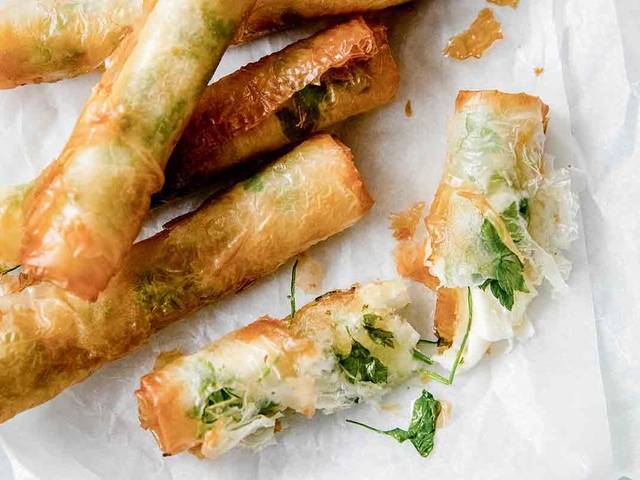
Ingredients
- 8 ounces feta, crumbled
- 10 sheets phyllo pastry (from the supermarket or, preferably, a Middle Eastern grocery store) or the more traditional yufka, halved
- 8 ounces halloumi, cut into 20 strips
- 1 bunch parsley (about 4 oz), divided into sprigs, left whole or chopped
- 1 quart sunflower or mild vegetable oil
Instructions
1. Remove the phyllo from the package and cover with a clean, damp towel. Working with 1 piece at a time, place the phyllo with the short end facing you. Place a few whole sprigs or a small heap of chopped parsley near the end closest to you and fold the phyllo over the parsley. Rub the folded pastry with a little oil. 2. Next, place a strip of halloumi and about 1 tablespoon crumbled feta alongside the folded phyllo and fold the side edges in about 1/2-inch (12-mm) and roll the whole thing up into a neat cigar shape. Seal the end with a little oil. Repeat with the remaining ingredients, working fairly quickly so that the pastry doesn't dry out or simply cover them with parchment and a towel. 3. In a large pot set over medium-high heat, warm the oil to 350°F (180°C), or until as soon as you drop a little bread becomes golden brown in 30 seconds. Place a plate topped with several paper towels or a brown paper bag alongside the stove. Working in batches, carefully add a few cigars to the oil and fry until golden brown, turning as necessary, 3 to 5 minutes. (If your phyllo rolls insist on floating cheese side down and aren’t browning evenly, use a slotted spoon or skimmer to keep the uncooked side submerged in the oil.) Be careful not to crowd the oil and check the temperature of the oil after each batch to ensure it’s at the appropriate heat for frying. 4. Drain the Turkish cigars on the paper towels or brown bag and devour immediately.
Estimated Nutrition (per serving)
* These are rough estimates based on common ingredient values. Actual nutrition may vary.
30
Calories
0g
Protein
0g
Carbs
4g
Fat
0g
Fiber
Tips & Variations
Presentation counts
First impressions matter - take time to plate starters beautifully.
Balance flavors
A good starter should awaken the palate with contrasting flavors and textures.
Fresh herbs
Middle Eastern cuisine uses herbs generously - don't be shy with parsley, mint, and cilantro.
Frequently Asked Questions

The Meal Finder - Infinite Recipes
© 2026 The Meal Finder