Couscous
0
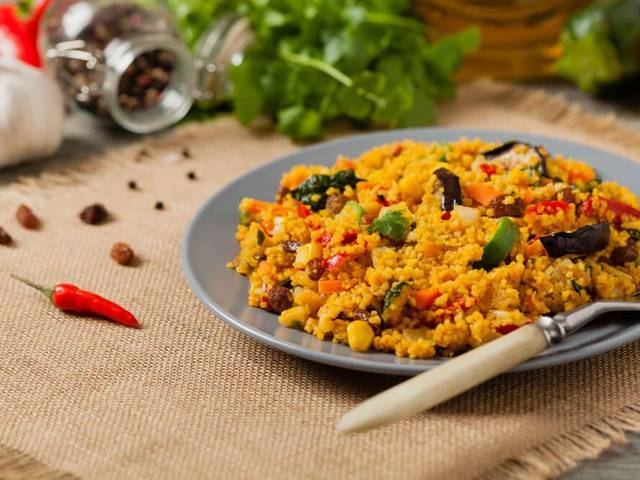
Ingredients
- vegetable stock cube: 1
- teaspoon of ground cinnamon: 1
- small bunch of coriander, chopped
- couscous: 500 g
- dried apricot, chopped: 100 g
- zest of lemon: 1
- handful of mint, chopped and reserve some leaves
- tablespoons of olive oil: 2
- red onions, finely sliced: 3
- teaspoon of caster sugar: 1
- teaspoons of turmeric: 2
- sunflower or vegetable oil: 500 ml
Instructions
1. Start by boiling water in a kettle. In a large bowl, add couscous, pour the vegetable stock on it, and start crumbling it up. Then add the turmeric, cinnamon, apricots, and season according to taste. Pour the boiling water in the same bowl, mix everything properly then tightly secure it with cling film, and let it sit for 5 minutes. In a separate bowl, add half of the onions and add a pinch of salt and sugar in it. Pour boiling water on top it (it must be enough to cover the onion) and let it steep for 10 minutes. This step will take the onion’s acidity away and turn them pink. In a deep saucepan, pour oil that would come up to 5 cm on the sides of it. When the oil has heated, fry the remaining of the onions in batches. Let them cook for 1 to 2 minutes until they are crispy and golden. Take them out on kitchen paper and lightly sprinkle with salt. With a spoon, fluff the couscous. Drain the onions that were steeping and stir them into the couscous along with the lemon juice and zest, olive oil, and herbs. When you are serving, put the couscous in the middle and scatter crispy onions and mint leaves on top. Trivia Couscous is a traditional North African Dish that is made by steaming semolina. Couscous is the ideal dish for vegetarians because –by modifying it a little- there are many health benefits to this dish. The main types of couscous are Moroccan, Israeli, and Lebanese.
Estimated Nutrition (per serving)
* These are rough estimates based on common ingredient values. Actual nutrition may vary.
83
Calories
0g
Protein
14g
Carbs
4g
Fat
0g
Fiber
Tips & Variations
Blanch vegetables
Blanching in boiling water then ice water keeps vegetables vibrant and crisp.
Season your water
Salt your pasta or vegetable water like the sea for better flavor.
Fresh herbs
Middle Eastern cuisine uses herbs generously - don't be shy with parsley, mint, and cilantro.
Frequently Asked Questions


The Meal Finder - Infinite Recipes
© 2026 The Meal Finder