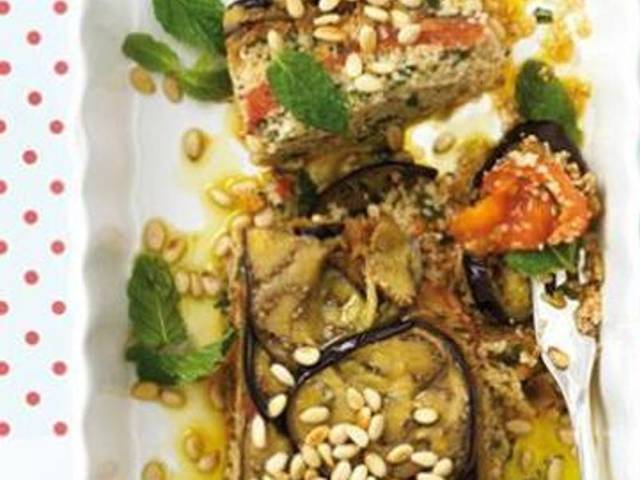
Moroccan-infused vegetable terrine with roasted pine nuts
0
Ingredients
- 2 brinjals, sliced into 1cm rounds
- 2 cups bulgur wheat, soaked and loosened
- 1 t cumin
- extra virgin olive oil
- 1 T Moroccan harissa paste
- 30 g fresh mint
- 100 g pine nuts, toasted, for serving
- 8–10 sun-dried tomatoes in brine
Instructions
1. Fry the brinjal in a warm pan with a little olive oil until golden brown. Season.Pour over the brine of the sun-dried tomatoes and leave to soak for 5 minutes.Combine the wheat, harissa paste and cumin. Finely chop half the mint then mix into the wheat.Line a medium-sized bread tin with clingfilm, leaving enough hanging over the sides to be folded back again.Add a layer of brinjal to the bottom of the tin. Top with a layer of wheat then some tomatoes. Continue layering until filled.Fold back the sides of the clingfilm to close. Add a weight to the top to press down the terrine.Refrigerate for 30 minutes or leave to stand in a cool place.To remove, open the clingfilm and carefully turn out onto a serving platter.Serve at room temperature or heat by placing in a microwave oven for 2 minutes.Top with the toasted pine nuts then drizzle with a little olive oil.Serve sliced, garnished with the remaining fresh mint.Per serving: 1053kJ, 7.9g protein, 12.1g fat, 31.2g carbsTASTE’s take:The growing interest in vegetarian cooking has led to the rediscovery of grains, especially wheat, as a natural food. Wheat is rich in protein, mineral salts and carbohydrates. Bulgur or burghul is cracked wheat – wheat that has been parboiled, parched and coarsely ground. It is commonly used in the Middle East and neighbouring regions, especially for making tabbouleh. Use it as the basis for pilaf, to make porridge (it takes less time to cook and has a more tender texture) or soups, or to stuff vegetables.
Estimated Nutrition (per serving)
* These are rough estimates based on common ingredient values. Actual nutrition may vary.
34
Calories
0g
Protein
1g
Carbs
4g
Fat
0g
Fiber
Tips & Variations
Umami boosters
Use nutritional yeast, miso, or soy sauce to add depth to plant-based dishes.
Protein combinations
Combine grains with legumes for complete protein nutrition.
Mise en place
French cooking relies on preparation - have everything ready before you start.
Frequently Asked Questions

The Meal Finder - Infinite Recipes
© 2026 The Meal Finder