Turkish Flatbread (Pide)
0
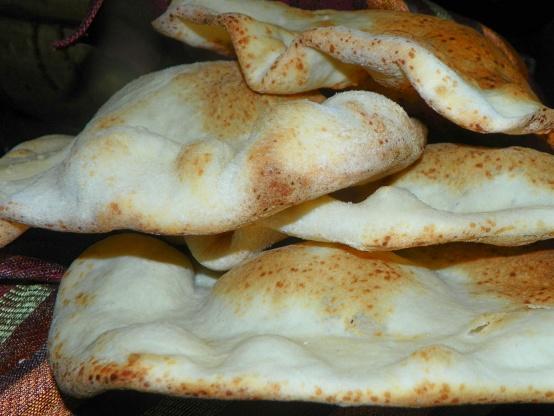
Ingredients
- 1/2 cup unbleached all-purpose flour
- 3 tablespoons olive oil
- 1/2 teaspoon sugar
- 4 teaspoons active dry yeast
Instructions
1. Dissolve the yeast and sugar in 1/2 cup warm water, and let stand in a warm place 10 minutes until frothy. 2. Stir in the 1/2 cup of flour, cover with plastic wrap and let rise 30 minutes. 3. To finish the dough, put the 3 1/2 cups of flour in a large bowl, and make a well in the center. 4. Put in the yeast-and-sugar mixture, salt, olive oil, and 1 cup plus 1 tablespoon of lukewarm water. 5. Gradually work in the flour to make a soft and sticky dough. 6. Knead the dough on a floured surface for 15 minutes. 7. The dough will be very sticky at first, but as you knead, it will gradually cease to stick to your hands. 8. You should have a damp and very springy dough that offers no resistance to kneading. 9. Put the dough in a oiled bowl, cover with plastic wrap, and let rise 1 hour, until well swollen. 10. (You can refrigerate the dough at this point until you're ready to use it.) Put the dough on a lightly floured surface and roll into a log. 11. Cut into 8 equal pieces, and roll each one into a tight ball. 12. Place the balls on a floured surface, and let rest 30 minutes under a towel. 13. Preheat the oven to 450 degrees, and if you have them, heat tiles 30-40 minutes before baking. 14. Roll one ball of dough on a floured surface with a rolling pin into a circle 1/4- to 1/8-inch thick and 8 inches in diameter. 15. Brush the top with olive oil. 16. Bake 5 or 6 minutes, and repeat the process with the remaining dough balls. 17. As the pide come out of the oven, stack them in a large pan and keep them covered until all are ready to eat. 18. Remember to let the oven temperature return to 450 degrees after baking 2 or 3 pide. 19. Serve the pide hot. 20. They also can be reheated wrapped in foil.
Estimated Nutrition (per serving)
* These are rough estimates based on common ingredient values. Actual nutrition may vary.
218
Calories
3g
Protein
44g
Carbs
4g
Fat
1g
Fiber
Tips & Variations
Umami boosters
Use nutritional yeast, miso, or soy sauce to add depth to plant-based dishes.
Protein combinations
Combine grains with legumes for complete protein nutrition.
Fresh herbs
Middle Eastern cuisine uses herbs generously - don't be shy with parsley, mint, and cilantro.
Frequently Asked Questions

The Meal Finder - Infinite Recipes
© 2026 The Meal Finder