Turkish Okra and Tomato With Olive Oil
0
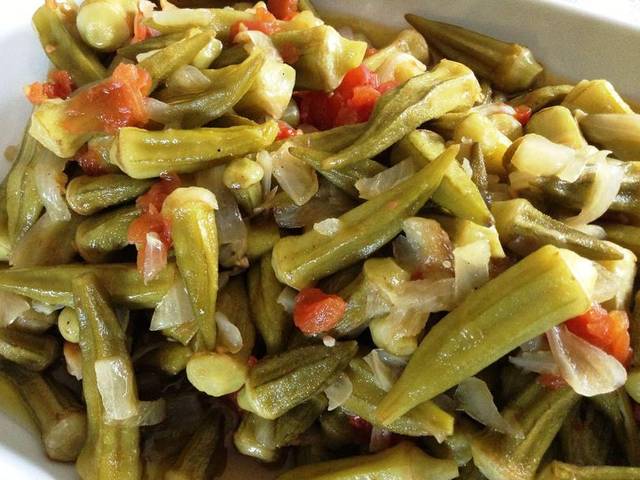
Ingredients
- 1/3 cup extra virgin olive oil (for garnish)
- Juice of 1/2 lemon
- 2.5 pounds/1 kilogram young (very fresh or frozen okra)
- 2 tablespoons olive oil
- 1 large onion (coarsely chopped)
- 3 tablespoons sugar
- 1 large, ripe tomato (peeled and cut in small cubes)
Instructions
1. If you are using fresh okra, trim the rough stems from the ends of the pods and remove the thin membrane covering the stem end. Handle them gently as not to damage them. Rinse them several times in a wire strainer under ice cold water, turning them with your hands. 2. Drain them and let them soak in one cup of vinegar for about 30 minutes. Wash them again to remove all the vinegar. Repeat this process once more. 3. After your okra soaks in vinegar and is rinsed the second time, it's ready to use. If you're using frozen okra, it's ready to use right out of the bag. 4. Peel the onion and coarsely chop it. Heat the 2 tablespoons of olive oil in a medium saucepan and fry the onions until tender and reduced. Add the fresh or frozen okra. 5. Wash and peel your tomato. Dice it into small cubes and add it to the pan. Add the lemon juice, salt, pepper, and sugar and turn the mixture around gently with a large wooden spoon. 6. Add the water, bring it to a boil, reduce the heat to low and cover. Let the okra simmer gently. The amount of liquid in the pan will increase as the vegetables release their own juice; you should simmer them until the okra are very tender and the liquid is almost gone. 7. Test your okra a few times while cooking. If they are tender but there is still a lot of liquid, remove the lid so the liquid evaporates more quickly. 8. When the okra is tender and the liquid is almost gone, turn off the heat and let the pan cool down to room temperature. Transfer the okra to your serving platter. 9. Drizzle the 1/3 cup of olive oil over the top of the dish. You can serve the okra room temperature or cover and refrigerate it before serving.
Estimated Nutrition (per serving)
* These are rough estimates based on common ingredient values. Actual nutrition may vary.
171
Calories
1g
Protein
28g
Carbs
7g
Fat
1g
Fiber
Tips & Variations
Umami boosters
Use nutritional yeast, miso, or soy sauce to add depth to plant-based dishes.
Protein combinations
Combine grains with legumes for complete protein nutrition.
Fresh herbs
Middle Eastern cuisine uses herbs generously - don't be shy with parsley, mint, and cilantro.
Frequently Asked Questions

The Meal Finder - Infinite Recipes
© 2026 The Meal Finder