Asian Shrimp and Rice Bowls
0
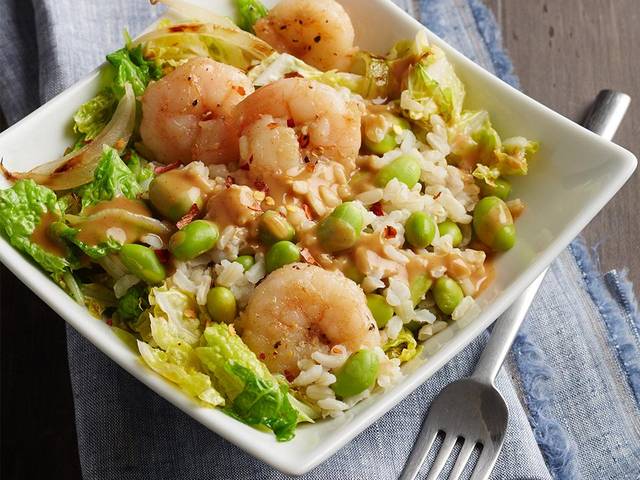
Ingredients
- 1 tablespoon canola oil
- ½ teaspoon ground coriander
- ½ cup frozen shelled edamame
- ¼ teaspoon ground ginger
- 1 tablespoon honey
- 4 cups coarsely shredded, trimmed napa cabbage
- ⅛ teaspoon ground nutmeg
- ½ cup slivered onion
- ¼ cup creamy peanut butter
- 12 ounces frozen large shrimp in shells, thawed, peeled, and deveined
- 1/8 to 1/4 teaspoon crushed red pepper
- ⅔ cup uncooked brown rice
- 2 teaspoons reduced-sodium soy sauce
Instructions
1. Slice white and light green parts of scallions; set aside. Thinly slice dark green scallion parts; set aside. Thinly slice 4 garlic cloves; set aside. Grate the remaining garlic clove using a Microplane grater; set aside. 2. Heat oil in a large, deep nonstick skillet with a tight-fitting lid over medium-high heat. Add the white and light green scallion slices, bell peppers, lemon zest, crushed red pepper and the sliced garlic. Cook, stirring occasionally, until the peppers slightly soften, 5 to 6 minutes. Add rice; cook, stirring constantly, for 1 minute. Stir in water and salt; bring the mixture to a simmer over medium-high heat. Cover and reduce heat to low. Cook, undisturbed, until the rice is tender, about 20 minutes, arranging shrimp on top of the mixture (do not stir in) during the final 5 minutes of cook time. Remove from heat; let stand, covered, until the shrimp are cooked through, about 5 minutes. 3. Combine butter, lemon juice and the grated garlic in a small microwaveable bowl. Microwave on High until the butter is melted, about 25 seconds. Stir the mixture and drizzle over the shrimp. Sprinkle with the reserved dark green scallion slices. Fluff the rice (do not stir in the shrimp) using a fork. Serve with lemon wedges, if desired.
Estimated Nutrition (per serving)
* These are rough estimates based on common ingredient values. Actual nutrition may vary.
88
Calories
2g
Protein
5g
Carbs
7g
Fat
0g
Fiber
Tips & Variations
Rest your meat
Let cooked meat rest for 5-10 minutes before cutting to keep juices inside.
Season generously
Season at each stage of cooking, not just at the end.
High heat
Wok cooking requires very high heat - get your pan smoking hot before adding ingredients.
Frequently Asked Questions
Similar Recipes You Might Like

The Meal Finder - Infinite Recipes
© 2026 The Meal Finder