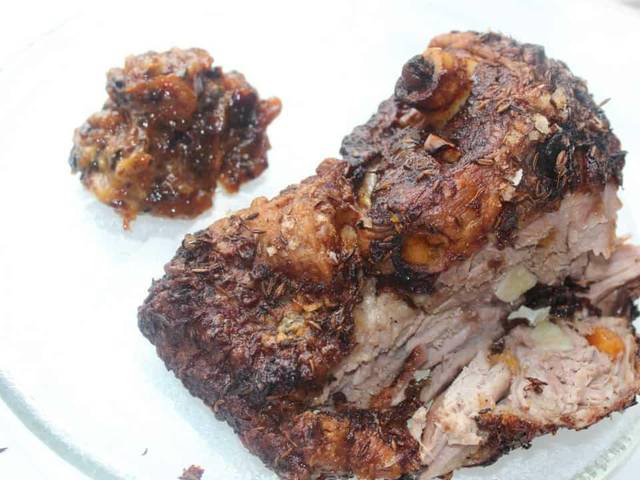
Moroccan Style Slow Roasted Lamb Served With Apricot Puree
0
Ingredients
- 17 ounces halved apricots ((500g))
- 1 tbsp dried cumin seeds
- 1 garlic bulb
- 2.2 pound lamb shoulder on the bone ((1 - 1.3kg))
- 3.3 ounces olive oil ((100ml))
- 1.7 ounces raisins ((50g))
- 1 tbsp fresh sage (finely chopped)
Instructions
1. Take 6 cloves of garlic and chop in half, do the same with 50g of the apricots. Make small, but fairly deep incisions all over the lamb and pop the apricots and garlic cloves in. You want to get them right into the meat. 2. Mix together the oil, cumin seeds, salt, sage and a good pinch of cracked black pepper. 3. Lay the lamb on a large piece of cling film and pour the oil mixture of the meat. Get your hands dirty and massage the mixture all over the lamb. Wrap securely in cling film and pop in the fridge for 2 hours to let the flavours develop. 4. Get a glass of wine as a reward. 5. Pre-heat the oven to 160º. 6. Line a baking tray with tin foil and put in the remaining apricots, garlic cloves and the raisins. Put as many in the middle of the tray as you can, as those on the outside will burn. Lay the lamb on top of the apricots and raisins and put in the oven for 2 1/2 hours. 7. Get some more wine - the hard work is done! 8. After 2 1/2 hours turn the oven up to 220º. After 1 hour take the lamb out. Transfer the lamb to a plate, cover and leave to rest. 9. Spoon the apricots (not the burnt ones!) and raisins that the lamb was roasting on into a blender, along with the meat juices. Blitz until smooth then slowly reheat in a pan on a low heat. 10. Carve the meat and serve with a spoonful of the apricot puree and your other favourite sides.
Estimated Nutrition (per serving)
* These are rough estimates based on common ingredient values. Actual nutrition may vary.
104
Calories
6g
Protein
0g
Carbs
9g
Fat
0g
Fiber
Tips & Variations
Rest your meat
Let cooked meat rest for 5-10 minutes before cutting to keep juices inside.
Season generously
Season at each stage of cooking, not just at the end.
Fresh herbs
Middle Eastern cuisine uses herbs generously - don't be shy with parsley, mint, and cilantro.
Frequently Asked Questions
Similar Recipes You Might Like

The Meal Finder - Infinite Recipes
© 2026 The Meal Finder