Pomegranate-Parsley Tabbouleh
0
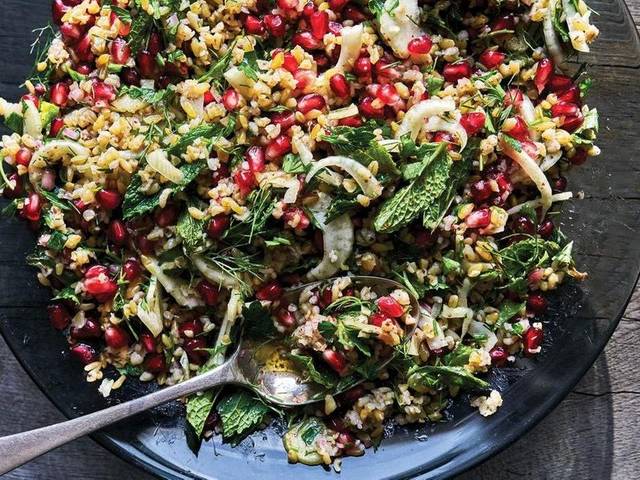
Ingredients
- ½ cup extra-virgin olive oil
- 1 small fennel bulb, fronds torn, bulb and stalks thinly sliced
- 1 cup whole freekeh, soaked overnight if possible
- 1 1" piece ginger, peeled, finely grated
- ¼ cup fresh lime juice
- 1 tsp. pure maple syrup
- Handful of mint leaves, torn if large
- 1 big bunch parsley, leaves and tender stems very coarsely chopped (about 1½ cups)
- 1 small serrano chile, finely grated
- 2 pomegranates
- 1 small shallot, finely chopped
- 2 tsp. sumac, plus more for serving
Instructions
1. Cook freekeh in a large pot of boiling salted water until al dente, 20–30 minutes. Drain and spread out on a rimmed baking sheet; season with kosher salt and pepper while still warm. Let cool. 2. Meanwhile, whisk together shallot, chile, ginger, oil, lime juice, maple syrup, and 2 tsp. sumac. Taste dressing and season with kosher salt. Let sit 10 minutes. 3. Cut pomegranates in half. Working over a large bowl, hold a pomegranate half cut side down in your palm with your fingers stretched wide. Use a wooden spoon to forcefully and repeatedly smack pomegranate skin, which will send the seeds raining down into the bowl. Repeat with remaining pomegranate. Fill bowl with cold water to cover seeds. Skim off any little bits of pith that float to the surface; drain seeds and shake off excess liquid. 4. Toss parsley, fennel, fennel fronds, and mint in a large bowl. Add freekeh, season with kosher salt, and toss gently to combine. Add dressing and toss with your hands to thoroughly coat ingredients. Add pomegranate seeds and toss gently to disperse. Sprinkle with sea salt and more sumac. 5. Do Ahead: Freekeh can be cooked 3 days ahead. Cover and chill.
Estimated Nutrition (per serving)
* These are rough estimates based on common ingredient values. Actual nutrition may vary.
15
Calories
0g
Protein
0g
Carbs
2g
Fat
0g
Fiber
Tips & Variations
Rest your meat
Let cooked meat rest for 5-10 minutes before cutting to keep juices inside.
Season generously
Season at each stage of cooking, not just at the end.
Fresh herbs
Middle Eastern cuisine uses herbs generously - don't be shy with parsley, mint, and cilantro.
Frequently Asked Questions
Similar Recipes You Might Like

The Meal Finder - Infinite Recipes
© 2026 The Meal Finder