Prawn, kimchi and noodle salad
0
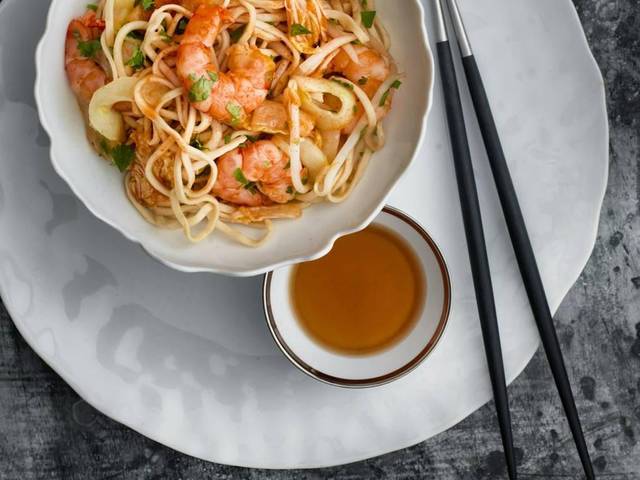
Ingredients
- 150g beansprouts
- 2 teaspoons soft, light brown sugar
- 1 small bunch (about 28g) coriander, finely chopped
- ½ cucumber, peeled, halved, de-seeded and sliced
- 275g medium egg noodles
- 3 tablespoons Thai fish sauce
- 4 garlic cloves, crushed
- 6cm piece root ginger, peeled and grated
- 3 tablespoons gochujang
- Juice of 1 lime
- 1 Chinese cabbage
- 350g large, cooked and peeled prawns
- 6 spring onions, trimmed and finely sliced
- 1 tablespoon toasted sesame oil
Instructions
1. For the kimchi, halve the cabbage lengthways and remove the core. Slice into 3cm-wide strips and place in a large mixing bowl. Sprinkle over the salt and rub into the cabbage for 2-3 minutes until the cabbage starts to release some moisture. Pour over enough cold water to cover the cabbage. Cover and leave overnight at room temperature. 2. Drain the cabbage and rinse thoroughly under cold water. Squeeze out as much liquid as possible and set aside in a mixing bowl. Mix together the remaining kimchi ingredients to form a paste and stir into the cabbage. Mix everything really well, then pack tightly into a 1-litre sterilised Kilner jar. Seal and leave at room temperature for 2 days, by which stage the cabbage should be bubbling slightly, a sign it is fermenting. Refrigerate at this stage. 3. For the salad, cook the noodles in boiling water according to the packet instructions. Drain and refresh with cold water. Place in a mixing bowl and stir in the sesame oil, lime juice and about 5-6 tablespoons kimchi, depending on how much heat you like. Add the cucumber, beansprouts and prawns, then the coriander, and toss everything together just before serving. Season if necessary with a little Thai fish sauce.
Estimated Nutrition (per serving)
* These are rough estimates based on common ingredient values. Actual nutrition may vary.
43
Calories
2g
Protein
9g
Carbs
0g
Fat
0g
Fiber
Tips & Variations
Rest your meat
Let cooked meat rest for 5-10 minutes before cutting to keep juices inside.
Season generously
Season at each stage of cooking, not just at the end.
High heat
Wok cooking requires very high heat - get your pan smoking hot before adding ingredients.
Frequently Asked Questions
Similar Recipes You Might Like

The Meal Finder - Infinite Recipes
© 2026 The Meal Finder