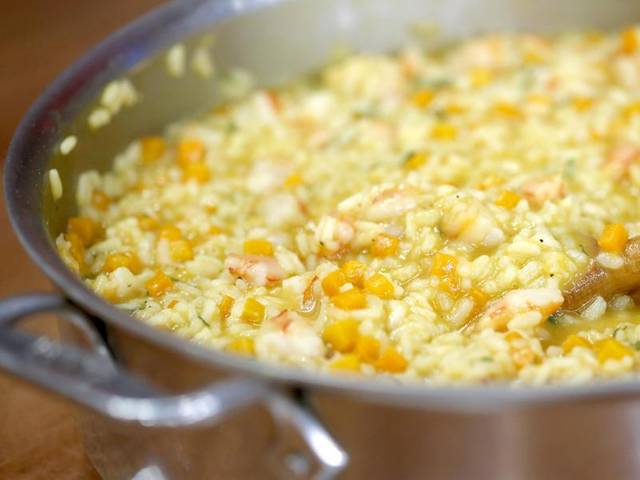
Risotto with Shrimp, Butternut Squash and Sage
0
Ingredients
- 1/2 butternut squash
- Canola or vegetable oil
- 6 cups boiling hot chicken stock, divided
- 1 tablespoon extra-virgin olive oil
- 8 ounces cleaned shrimp, diced into 1/4-inch pieces
- 1 cup arborio rice
- 1 tablespoon sage, chiffonade
Instructions
1. For the Sautéed Butternut Squash: 2. Cut the top part of a butternut squash off and peel. Cut into 1/4-inch thick slices. Cut the slices into 1/4-inch thick sticks. Cut the sticks into 1/4-inch pieces. Heat a large sauté pan over medium heat. Add the oil and squash. Season with the salt and pepper. Sauté until tender. Reserve. 3. For the Butternut Squash Purée: 4. Preheat the oven to 375°. Cut the bottom part of the butternut squash in half. Scoop out the seeds. Drizzle the cut side of the squash with a little canola or vegetable oil and season with the salt and pepper. Place the squash cut-side down on a baking tray lined with parchment paper. Roast the squash until tender. Once cool enough to handle, scoop the flesh from the skin and puree in a food processor until smooth. Reserve. 5. For the Risotto with Shrimp, Butternut Squash and Sage: 6. Heat a 12-inch sauté pan over medium heat. 7. Add the oil and rice. Cook for two minutes, stirring frequently. Season with the salt and pepper. 8. Begin adding the stock. Add 1/2 cup to 1 cup at a time, stirring constantly. Cook each addition until when you run spatula through the rice it does not flow back. 9. Repeat until the rice is almost cooked and when only one addition of liquid remains, add the diced Sautéed Butternut Squash and shrimp. Cook until shrimp turns pink. 10. Add the Butternut Squash Puree and sage. Mix well and then divide among four bowls.
Estimated Nutrition (per serving)
* These are rough estimates based on common ingredient values. Actual nutrition may vary.
304
Calories
13g
Protein
7g
Carbs
25g
Fat
0g
Fiber
Tips & Variations
Rest your meat
Let cooked meat rest for 5-10 minutes before cutting to keep juices inside.
Season generously
Season at each stage of cooking, not just at the end.
Al dente pasta
Cook pasta until it's still slightly firm - it will continue cooking in the sauce.
Frequently Asked Questions
Similar Recipes You Might Like

The Meal Finder - Infinite Recipes
© 2026 The Meal Finder