Roasted Pork Loin
0
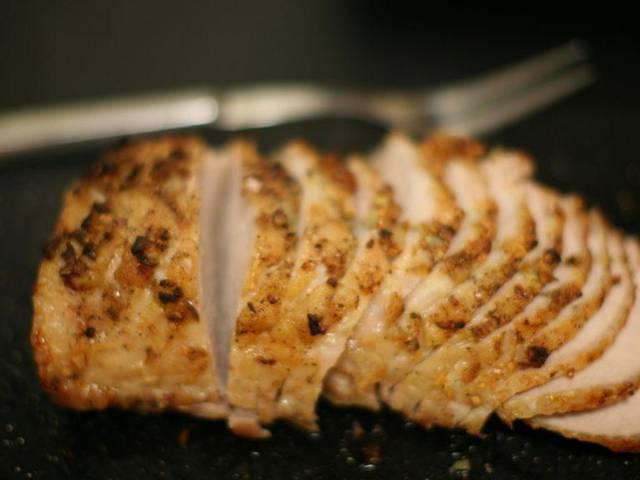
Instructions
1. Preheat the oven to 500 degrees F and prep the roast. The oven will take at least 20 minutes to heat up, so make sure to plan accordingly. Pork loin has a thick layer of fat on one side. In order to render that fat and achieve a crispy crust, score the top in a criss-cross pattern. Cut through the fat but try not to cut the meat too much. Apply the salt, spices, and seasonings to the roast and rub it in. For this recipe, I used sea salt, black pepper, and garlic. I also chopped some onion to roast the pork with; the onions will get caramelized and will taste awesome. Once the oven has preheated, place the roast on the rack in the next to the bottom position. 2. The first stage of roasting pork is a high temperature for 20 or 30 minutes to render the fat and create a crust. In this first step of roasting pork, the high heat is melting down the fat or rendering it. The fat begins to get crispy and caramelize. This texture and flavor combination will be a nice contrast to the juicy and soft inside of the pork roast. Some people believe this step seals in juices. This is not true. Juices can escape just as easily after searing the outside. The only reason we brown the outside is because it looks nice and tastes good. The juices won’t go anywhere unless you overcook it or cut the roast while it’s too hot. 3. The second stage of roasting pork will require patience and a digital thermometer. Once the roast has been in the oven long enough to get brown on the outside take the roast out of the oven and lower the temperature to 350 degrees F. The roasting time for this second stage will depend on the internal temperature of the roast, as when it reaches 150 F, it is done. The easiest way to monitor the internal temperature of the roast is to use a digital thermometer with a detachable probe. That way you can see the temperature rise as the roast finishes cooking. Many of these thermometers come with temperature alarms that will go off at a set temperature, like 150. Then you simply take the roast out. Pretty sweet. 4. The final stage of roasting pork is letting the meat rest after coming out of the oven. Once the internal temperature has reached 150, take the roast out of the oven. Remove the roast from the pan or elevate it somehow to give the juices a place to go. Drape some aluminum foil over the top, set a timer for 20 minutes and walk away. This is very important. Let it sit for 20–30 minutes before cutting into it. Cut into it too soon and you ruin all your hard work. Trust me; it will be worth it. And don’t forget the onions you cooked alongside the roast. They will taste awesome with the pork, so serve them too.
Estimated Nutrition (per serving)
* These are rough estimates based on common ingredient values. Actual nutrition may vary.
72
Calories
7g
Protein
3g
Carbs
4g
Fat
1g
Fiber
Tips & Variations
Rest your meat
Let cooked meat rest for 5-10 minutes before cutting to keep juices inside.
Season generously
Season at each stage of cooking, not just at the end.
Season boldly
American comfort food is all about bold, satisfying flavors.
Frequently Asked Questions
Similar Recipes You Might Like

The Meal Finder - Infinite Recipes
© 2026 The Meal Finder