Rolled Flank Steak
0
Ingredients
- thick cut bacon: 4 slices
- beef flank steak: 1 (2 pounds)
- red bell pepper, seeded, and cut into strips: 1/2
- sliced crimini mushrooms: 1/2 cup
- olive oil: 1/2 cup
- thinly sliced provolone cheese: 8 ounces
- soy sauce: 1/4 cup
- fresh spinach leaves: 1/2 cup
- steak seasoning: 2 tsp
Instructions
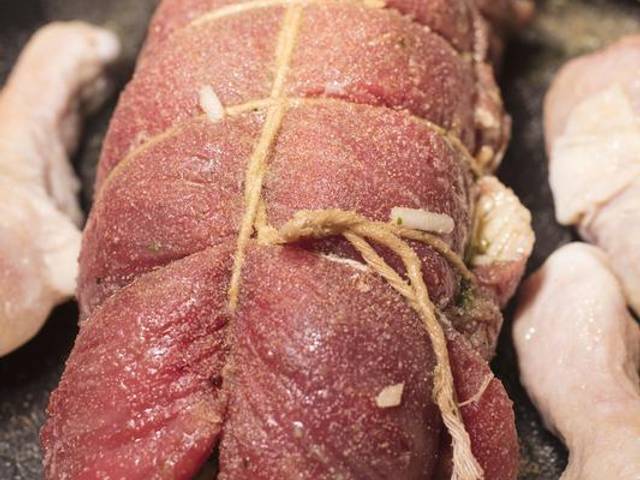
1. Put the flank steak on a chop-board with the narrow end close to you. Beginning from one of the long sides, slit through the meat horizontally to be within a ½ inch of the opposite side. (Your butcher can also butterfly the flank steak if you don’t want to or can’t do it yourself) Put olive oil, soy sauce, and steak seasoning in a gallon-sized plastic bag and mix well. Marinate the flank steak in the mixture. Put it in the bag of the mixture and refrigerate 4 hours to overnight. Once marinated, preheat your oven to 175 degrees Celsius or 350 degrees Fahrenheit. Lubricate a baking dish made of glass. Draw the flank steak in your front with the grain of the meat running from left to right. Cover thoroughly with provolone cheese leaving a 1-inch border. Arrange the spinach, red pepper, bacon, and mushrooms on the top of the cheese covered steak in bands running in the same direction as meat grains. Roll up the flank steak. Roll firmly but make sure the fillings do not dribble out. Once rolled, tie with kitchen twine with a gap of 2 inches through the rolled flank steak. Place in a baking dish and bake in the preheated oven for at least an hour or until the internal temperature touches 65 degrees Celsius or 145 degrees Fahrenheit. Remove from the oven, let rest for 5 to 10 minutes and cut into 1-inch slices. Remove the twine and serve. Trivia: The word steak was introduced in the mid-15th century. It comes from a Scandinavian word steik, or stickna in Middle English language. An early recipe book written in the 15th century referred to the steak as ‘stekys’ and explains both beef and venison steaks. Rolled flank steaks, however, are thought to have evolved during the late 90s or early years of the 20th century i.e. the year 2000 onwards.
Estimated Nutrition (per serving)
* These are rough estimates based on common ingredient values. Actual nutrition may vary.
123
Calories
9g
Protein
2g
Carbs
9g
Fat
1g
Fiber
Tips & Variations
Rest your meat
Let cooked meat rest for 5-10 minutes before cutting to keep juices inside.
Season generously
Season at each stage of cooking, not just at the end.
Mise en place
French cooking relies on preparation - have everything ready before you start.
Frequently Asked Questions
Similar Recipes You Might Like

The Meal Finder - Infinite Recipes
© 2026 The Meal Finder